
24 August 2026 •
Page last updated 12 October
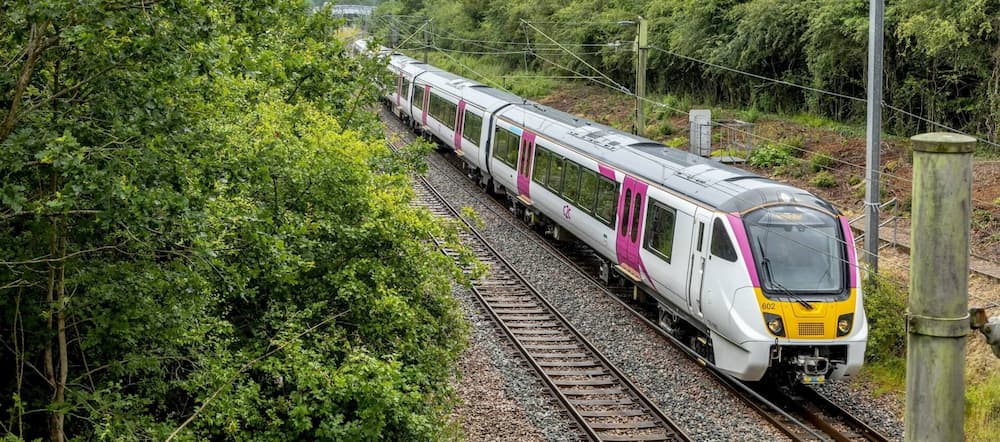
Customers using c2c’s services are being advised to check journey planners before they travel as the timetable has been amended in response to track conditions.
As a result of the record-breaking hot weather and sustained low rainfall, the clay that sits under long stretches of the railway in Essex has dried out and shrunk, which has caused some issues with track quality.
Safety is and will always remain the railway industry’s highest priority. To keep everyone moving safely and reliably, speed restrictions and temporary timetable amendments are being applied to give customers more certainty about services and reduce the risk of short-notice disruption.
From Tuesday 25 August, there have been a number of timetable changes:
- London-bound trains (from Shoeburyness, Upminster, Pitsea, and Grays) will depart at least 6 minutes earlier
- Outbound trains from London will arrive at their destinations at least 6 minutes later.
The amended timetable for Monday to Friday can be found here, please also check the engineering works calendar incase there are any changes due to engineering works.
Customers should check before they travel in case there are any late notice changes at c2c-online.co.uk and at www.nationalrail.co.uk
How long will these changes last?
Speed restrictions will need to be in place until the ground conditions have recovered, which can take some time. GBR Anglia will work hard to reintroduce the normal timetable as soon as possible.
What’s being done to make the railway resilient to hot weather?
Network Rail has a programme underway to protect the railway from extreme weather and climate change, supported by £2.6 billion investment in track maintenance and renewals. Investment includes drainage, earthworks, track and overhead power improvements, as well as monitoring and predictive technologies to identify risks earlier and enable proactive intervention.
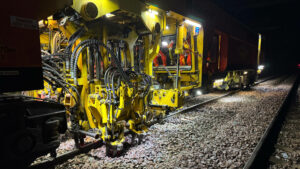
To minimise the effects of dried-out soil on Anglia this summer, extra engineering work will continue, with Network Rail using machines called tampers to help create a solid foundation so that trains can run smoothly. New ballast (the stones underneath the rails and sleepers) is also being put down to help raise the level of the track.
Last year, railway engineers used tampers to treat around 100km of track affected by dried-out soil on Anglia. Ahead of this summer season, thousands of tonnes of ballast were dropped to help keep the track as smooth as possible, with 49,000 tonnes expected to be dropped during 2026 in total.
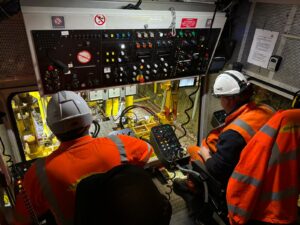
Martin Beable, Chief Operating Officer for GBR Anglia, said: “We’re taking action to keep everyone moving safely and reliably while minimising the impact on passengers. Our teams are working together across Anglia to keep running the best possible service despite the significant challenges we’re facing because of this exceptionally hot and dry weather.
“We never want our customers to experience disruption, but safety will always be our priority. Thank you for bearing with us, and please do check before you travel, particularly if you’re used to getting the same time train every day.”
GBR Anglia brings c2c, Greater Anglia and Network Rail Anglia together under a single unified structure on the journey to Great British Railways. The three organisations are increasingly planning and delivering as one railway, enabling faster and more joined up decision-making.